
Mouse Secondary Antibodies


Biotium Connexin 32 (Gap Junction Protein) (GJB1/1753), CF740 conjugate, 0.1mg/mL
This Ab recognizes a protein of 27-32 kDa, identified as Connexin 32. The connexin family of proteins forms hexameric complexes called connexons that facilitate movement of low molecular weight proteins between cells via gap junctions. Connexin proteins share a common topology of four transmembrane alpha-helicaldomains, two extracellular loops, a cytoplasmic loop and cytoplasmic N- and C-termini. Many of the key functional differences arise from specific amino-acid substitutions in the most highly conserved domains, the transmembrane and extracellular regions. Each of the approximately 20-connexin isoforms produces channels with distinct permeability and electrical and chemical sensitivities; therefore, one connexin usually cannot fully substitute for another.Primary antibodies are available purified, or with a selection of fluorescent CF Dyes and other labels. CF Dyes offer exceptional brightness and photostability. Note: Conjugates of blue fluorescent dyes like CF405S a

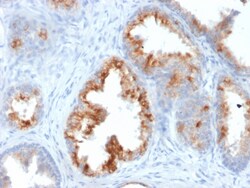
Biotium AMACR / p504S (Prostate Cancer Marker)(AMACR/1864), CF488A conjugate, 0.1mg/mL
This antibody recognizes a protein of 42 kDa, which is identified as Alpha-methylacyl-CoA Racemase (AMACR), also known as p504S. It is an enzyme that is involved in bile acid biosynthesis and -oxidation of branched-chain fatty acids. AMACR is essential in lipid metabolism. It is expressed in cells of premalignant high-grade prostatic intraepithelial neoplasia (HGPIN) and prostate adenocarcinoma. The majority of the carcinoma cells show a distinct granular cytoplasmic staining reaction. AMACR is present at low or undetectable levels in glandular epithelial cells of normal prostate and benign prostatic hyperplasia. A spotty granular cytoplasmic staining is seen in a few cells of the benign glands. AMACR is expressed in normal liver (hepatocytes), kidney (tubular epithelial cells) and gall bladder (epithelial cells). Expression has also been found in lung (bronchial epithelial cells) and colon (colonic surface epithelium). AMACR expression can also be found in hepatocellular car
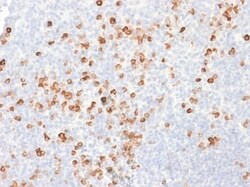
Biotium SOX2 (Transcription Factor) (SOX2/1791), CF568 conjugate, 0.1mg/mL
SOX2 is a member of the SRY-related HMG-box (SOX) family of transcription factors involved in the regulation of embryonic development and in the determination of cell fate. At present, 30 Sox genes have been identified. SOX2 is required for stem cell maintenance in the central nervous system, and it also regulates gene expression in the stomach. SOX2 is necessary for regulating multiple transcription factors that affect Oct 3/4 expression. An essential function of SOX2 is to stabilize embryonic stem cells in a pluripotent state by maintaining the requisite level of Oct 3/4 expression.Primary antibodies are available purified, or with a selection of fluorescent CF Dyes and other labels. CF Dyes offer exceptional brightness and photostability. Note: Conjugates of blue fluorescent dyes like CF405S and CF405M are not recommended for detecting low abundance targets, because blue dyes have lower fluorescence and can give higher non-specific background than other dye colors.
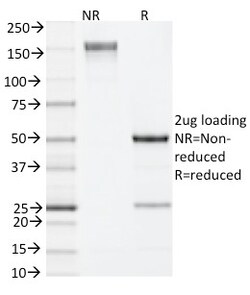
Biotium IL-4 (Interleukin-4), Mouse(11B11), CF568 conjugate, 0.1mg/mL
IL-4 is a pleiotropic cytokine produced by activated T cells, mast cells, and basophils. IL-4 is a potent lymphoid cell growth factor, which stimulates the growth and activation of certain B cells and T cells. IL-4 is important for regulation of T helper subset development. IL-4 is expressed primarily by activated Th2 cells and NK cells, and at lower levels by mast cells, and basophils. IL-4 signals through the IL-4R, and dendritic cell IL-12. Primary antibodies are available purified, or with a selection of fluorescent CF Dyes and other labels. CF Dyes offer exceptional brightness and photostability. Note: Conjugates of blue fluorescent dyes like CF405S and CF405M are not recommended for detecting low abundance targets, because blue dyes have lower fluorescence and can give higher non-specific background than other dye colors.
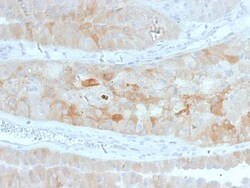
Biotium ROR2(ROR2/1912), Biotin conjugate, 0.1mg/mL
ROR2 (receptor tyrosine kinase-like orphan receptor 2), also known as neurotrophic tyrosine kinase receptor-related 2 (NTRKR2), is a single pass transmembrane tyrosine-protein kinase receptor. It contains a cytoplasmic tyrosine kinase domain, distally located serine-threonine-rich domains, an extracellular immunoglobulin-like domain, a cysteine-rich domain and a kringle domain. ROR2 is important for skeletal and endocrine development and is required for cartilage and growth plate development. It promotes the differentiation of osteoblasts and plays an important role in the early formation of chondrocytes. ROR2 sequesters and associates with Dlxin-1 affecting the transcriptional function of Msx-2. ROR2 also interacts with canoncial Wnt-1 and Wnt-3, regulating their signaling pathways. Defects in ROR2 can result in the autosomal dominant skeletal disorder, brachydactyly type B1, or the autosomal recessive skeletal disorder, Robinow syndrome. Primary antibodies are available pur
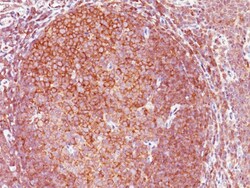
Biotium BCL10 (MALT-Lymphoma Marker)(151), CF488A conjugate, 0.1mg/mL
B-cell lymphoma/leukemia 10 (BCL10) is a signaling protein that promotes apoptosis, pro-caspase-9 maturation, and activation of NF-kappa-B via NIK and IKK. BCL10 contains an N-terminal caspase recruitment domain (CARD), which is found in a number of apoptotic regulatory molecules. BCL10 is involved in the adaptive immune response, and may be an adapter protein between upstream TNFR1-TRADD-RIP complex and the downstream NIK-IKK-IKAP complex. A BCL10 translocation is recurrent in low-grade mucosa-associated lymphoid tissue (MALT lymphoma). Primary antibodies are available purified, or with a selection of fluorescent CF Dyes and other labels. CF Dyes offer exceptional brightness and photostability. Note: Conjugates of blue fluorescent dyes like CF405S and CF405M are not recommended for detecting low abundance targets, because blue dyes have lower fluorescence and can give higher non-specific background than other dye colors.
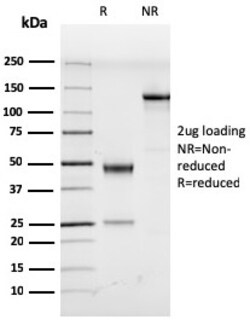
Biotium Human Herpes Virus 8 (HHV8)(LN53), CF568 conjugate, 0.1mg/mL
HHV 8 encodes a latent nuclear antigen (LNA), which is the product of the viral gene orf 73. LNA is capable of forming a complex with retinoblastoma susceptibility gene product, which may be related to its oncogenic activity. HHV8 is associated with three different diseases observed in AIDS patients; kaposi's sarcoma, primary effusion lymphoma (which is a rare type of non-Hodgkin lymphoma affecting the body cavities) and multicentric Castleman's disease. HHV 8 is the likely etiological agent of Kaposis sarcoma. Primary antibodies are available purified, or with a selection of fluorescent CF Dyes and other labels. CF Dyes offer exceptional brightness and photostability. Note: Conjugates of blue fluorescent dyes like CF405S and CF405M are not recommended for detecting low abundance targets, because blue dyes have lower fluorescence and can give higher non-specific background than other dye colors.
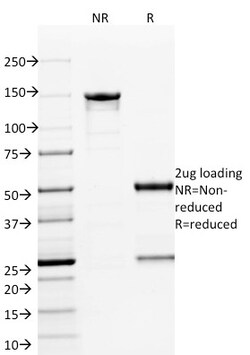
Biotium ETS1 (Marker of Tumor Metastasis)(ETS1/1801), CF568 conjugate, 0.1mg/mL
ETS1 proto-oncogene is an important transcription factor that plays a role in cell proliferation and differentiation. ETS1 is related to the growth of carcinoma cells by its regulation of the transcription of matrix metalloproteinases and urokinase-type plasminogen activator. The processes of tumor invasion and metastasis depend on the increased proteolytic activity of the invading tumor cells that may involve matrix metalloproteinases, cathepsins B and D and plasminogen activator in the metastatic cascade. ETS1 is preferentially expressed in lymphoid cells, where it is essential for the maintenance of the normal pool of resting T and B cells. ETS1 expression level and distribution are differentially controlled in resting, activated and apoptotic lymphocytes. Primary antibodies are available purified, or with a selection of fluorescent CF Dyes and other labels. CF Dyes offer exceptional brightness and photostability. Note: Conjugates of blue fluorescent dyes like CF405S a
Biotium CELA3B / ELA3B (Pancreatic Function Marker) (CELA3B/1757), CF488A conjugate, 0.1mg/mL
This MAb recognizes a protein of ~30 kDa, identified as CELA3B (Chymotrypsin like elastase family member 3B). Elastases form a subfamily of serine proteases that hydrolyze many proteins in addition to elastin. Humans have six elastase genes which encode the structurally similar proteins elastase 1, 2, 2A, 2B, 3A, and 3B. Unlike other elastases, elastase 3B has little elastolytic activity. Like most of the human elastases, elastase 3B is secreted from the pancreas as a zymogen and, like other serine proteases such as trypsin, chymotrypsin and kallikrein; it has a digestive function in the intestine. Elastase 3B preferentially cleaves proteins after alanine residues. Elastase 3B may also function in the intestinal transport and metabolism of cholesterol. Both elastase 3A and elastase 3B have been referred to as protease E and as elastase 1, and excretion of this protein in fecal material is frequently used as a measure of pancreatic function.Primary antibodies are available purified
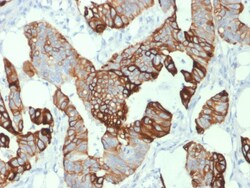
Biotium Cytokeratin 20 (KRT20) (Colorectal Epithelial Marker)(KRT20/1993), CF740 conjugate, 0.1mg/mL
This MAb recognizes an intermediate filament protein of 46 kDa, identified as cytokeratin 20 (KRT20). KRT is abundantly expressed in goblet cells and enterocytes of the gastrointestinal tract. It is a useful marker of pancreatic and colorectal cancer. KRT20 is expressed under normal, hyperplastic and neoplastic conditions. It has been detected in adenocarcinomas of the colon, stomachand biliary tract. Breast carcinomas are generally non-reactive. Primary antibodies are available purified, or with a selection of fluorescent CF Dyes and other labels. CF Dyes offer exceptional brightness and photostability. Note: Conjugates of blue fluorescent dyes like CF405S and CF405M are not recommended for detecting low abundance targets, because blue dyes have lower fluorescence and can give higher non-specific background than other dye colors.
Biotium PD1, Mouse(RMP1-14), CF740 conjugate, 0.1mg/mL
PD-1 is expressed on a subset of CD4-CD8-thymocytes, and on activated T and B cells. PD-1 is thought to be involved in lymphocyte clonal selection and peripheral tolerance. The PD-1 ligands, PD-L1 (also known as B7-H1) and PD-L2 (B7-DC), are members of the B7 immunoglobulin superfamily. PD-1 is transiently expressed on CD4 and CD8 thymocytes as well as activated T and B-lymphocytes and myeloid cells. Additionally, Pdcd1mRNA is expressed in developing B-lymphocytes during the pro-B-cell stage. The RMP1-14 antibody has been reported to block the binding of PD-1 to its ligands (B7-H1 and B7-DC) and to inhibit T cell proliferation and cytokine production co-stimulated by macrophages (but not by dendritic cells and B cells).Primary antibodies are available purified, or with a selection of fluorescent CF Dyes and other labels. CF Dyes offer exceptional brightness and photostability. Note: Conjugates of blue fluorescent dyes like CF405S and CF405M are not recommended for de
Biotium CDX2 (GI Epithelial Marker) (CDX2/1690), Biotin conjugate, 0.1mg/mL
The intestine-specific transcription factors CDX1 and CDX2 are important for directing intestinal development, differentiation, proliferation and maintenance of the intestinal phenotype. CDX2 protein expression has been seen in GI carcinomas. Anti-CDX2 has been useful to establish GI origin of metastatic adenocarcinomas and carcinoids and is especially useful to distinguish metastatic colorectal adenocarcinoma from lung adenocarcinoma. However, mucinous carcinomas of the ovary also express CDX2 protein. It limits the usefulness of this marker in the distinction of metastatic colorectal adenocarcinoma from mucinous carcinoma of the ovary.Primary antibodies are available purified, or with a selection of fluorescent CF Dyes and other labels. CF Dyes offer exceptional brightness and photostability. Note: Conjugates of blue fluorescent dyes like CF405S and CF405M are not recommended for detecting low abundance targets, because blue dyes have lower fluorescence and can give hi
Biotium Desmoglein-1 (DSG1) (DSG1/1733), CF488A conjugate, 0.1mg/mL
This antibody recognizes a protein of ~150 kDa, identified as Desmoglein-1 (DSG1). Desmoglein-1 is a member of the desmosomal cadherin family. Desmosomes are intercellular adhering junctions that represent cell surface attachment sites for intermediate filament. Desmocollins and desmogleins are the main desmosomal transmembrane proteins. Desmogleins consist of Dsg1, Dsg2, Dsg3, and Dsg4 isoforms. Within the desmosome, the extracellular domain of desmoglein is essential for calcium dependent heterophilic binding to the desmocollins, whereas the intracellular domain is essential for binding to the desmosomal plaque protein, plakoglobin. Desmoglein 1 is synthesized exclusively in the suprabasal layers. Intact and functionally active desmoglein 1 is essential to epidermal integrity.Primary antibodies are available purified, or with a selection of fluorescent CF Dyes and other labels. CF Dyes offer exceptional brightness and photostability. Note: Conjugates of blue fluorescent
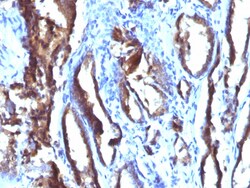
Biotium Prostate Specific Antigen (PSA)(3E6), CF568 conjugate, 0.1mg/mL
Recognizes a single protein of 33-34 kDa, identified as the prostate specific antigen (PSA). This MAb is highly specific to PSA and stains prostatic secretory and ductal epithelium in both normal and neoplastic tissues. PSA is a chymotrypsin-like serine protease (kallikrein family) exclusively produced by the prostate epithelium, and abundant in seminal fluid. PSA can be detected in the sera of patients with prostatic carcinoma. It is predominantly complexed to a liver-derived serine protease inhibitor, alpha-1-antichymotrypsin (ACT). A higher proportion of serum PSA is complexed to ACT in prostate cancer than in benign prostate hyperplasia. This MAb makes an excellent pair with MAb A67-B/E3 for PSA tests.Primary antibodies are available purified, or with a selection of fluorescent CF Dyes and other labels. CF Dyes offer exceptional brightness and photostability. Note: Conjugates of blue fluorescent dyes like CF405S and CF405M are not recommended for detecting low ab
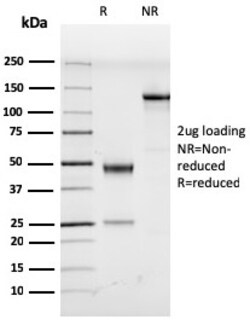
Biotium Human Herpes Virus 8 (HHV8)(LN53), CF488A conjugate, 0.1mg/mL
HHV 8 encodes a latent nuclear antigen (LNA), which is the product of the viral gene orf 73. LNA is capable of forming a complex with retinoblastoma susceptibility gene product, which may be related to its oncogenic activity. HHV8 is associated with three different diseases observed in AIDS patients; kaposi's sarcoma, primary effusion lymphoma (which is a rare type of non-Hodgkin lymphoma affecting the body cavities) and multicentric Castleman's disease. HHV 8 is the likely etiological agent of Kaposis sarcoma. Primary antibodies are available purified, or with a selection of fluorescent CF Dyes and other labels. CF Dyes offer exceptional brightness and photostability. Note: Conjugates of blue fluorescent dyes like CF405S and CF405M are not recommended for detecting low abundance targets, because blue dyes have lower fluorescence and can give higher non-specific background than other dye colors.